Choosing Nightwear for Camping: Comfort vs Warmth
Quick Answer: For camping nightwear, choose comfortable, dry clothes you haven't worn during the day. A clean base layer top, comfortable bottoms (joggers, lightweight trousers, or pyjama bottoms), and warm socks form a reliable foundation. For UK summer campsite nights (typically 12-18°C), a cotton t-shirt and light bottoms work well. For colder conditions or wild camping, switch to merino or synthetic base layers that retain warmth when damp. The most important rule: always change out of your day clothes before getting into your sleeping bag.
Why Your Sleeping Clothes Matter More Than Your Sleeping Bag
You crawl into the sleeping bag at eleven, still wearing the t-shirt from the day's walking. It felt fine around the campfire. Now, lying flat, the fabric sits clammy against your back. You zip the bag higher, pull the drawcord tighter. Twenty minutes later you're warm enough to doze off, but by one in the morning you're too hot. You unzip, cool air rushes in, and the cycle starts again. By three, you're wide awake, fumbling for your head torch, trying to find a dry top in the stuff sack you shoved to the bottom of your pack.
The issue is not the sleeping bag. It is what you wore into it.
A sleeping bag works by trapping a thin layer of air around your body and letting your own heat warm that air. Dry clothing allows this process to work efficiently. Damp fabric from a day's walking does the opposite: it holds moisture against your skin, and that moisture conducts heat away from your body faster than still air does. The result is a cold microclimate inside a bag rated to keep you warm. Your sleeping bag has not failed. Your clothing choice undermined it.
The good news is that the fix is simple, and what you should actually wear to bed when camping depends largely on how you camp. Daytime camping layers serve a different purpose to sleep layers, and treating them as interchangeable is where most discomfort begins. Understanding your camping clothing choices as a whole system, day and night, makes the difference between restless hours and genuine sleep.
What to Wear to Bed When Car Camping or Glamping
When your car is parked ten metres from the tent, weight is irrelevant. Comfort is the only priority.
This is where most camping nightwear advice goes wrong. Outdoor blogs assume everyone is backpacking with a 40-litre pack, so they recommend technical base layers and ultralight merino as though you are heading into the Cairngorms. If you are driving to a holiday park in the New Forest or a campsite in Pembrokeshire for a long weekend, none of that applies. Wear whatever you sleep best in at home.
Pyjamas are fine. Joggers and a soft t-shirt are fine. A onesie, if that is your thing, is entirely fine. The only practical consideration is to keep your sleep clothes in a separate bag in the car and change into them at camp. That way they stay clean and dry regardless of what the day throws at you.
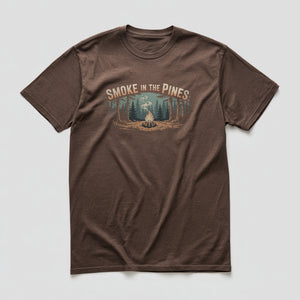
Cotton works perfectly in this context. For warm-season campsite nights, a quality cotton t-shirt makes a comfortable, breathable sleep top. Lone Creek's cotton tees sit at a weight that balances breathability with enough substance for cooler evenings. There is no need to overthink fabric choice when you have the luxury of car access and a sheltered pitch.
Pack a pair of slippers or flip-flops for middle-of-the-night trips to the toilet block. An eye mask helps if you are camping in June when it barely gets dark. And bring your own pillow if you have the space. Sleep quality improves more from familiar comforts than from any technical fabric.
Campsite Camping Nightwear: Balancing Comfort and Practicality
If you are walking to your pitch with a loaded rucksack, or taking public transport to a campsite, packability starts to matter. You cannot bring a full set of home comforts, but you do not need full technical kit either.
The practical middle ground is a clean set of dedicated sleep clothes: a fresh t-shirt or lightweight long-sleeve top depending on the season, joggers or comfortable trousers, and a pair of warm socks. The key word is dedicated. These clothes stay in your pack until you reach camp. They never get worn for walking, cooking, or sitting in drizzle.
For summer campsite evenings, a cotton hoodie works well as a layer worn around camp after the day's walking that doubles as a sleep layer on moderate nights. Lone Creek's hoodies provide the warmth suited to UK three-season campsite use. As temperatures drop into autumn, switch from cotton to a merino or synthetic long-sleeve base layer for sleeping. The difference in warmth retention when fabric gets even slightly damp becomes noticeable below about 10°C.
Keeping clothes dry between your pack and your sleeping bag is half the battle. A simple dry bag or waterproof stuff sack for your sleep clothes costs almost nothing and solves the problem of arriving at camp with a damp kit bag.
A beanie is worth its negligible weight from September onwards. Your head is often the most exposed part of your body inside a sleeping bag, and covering it noticeably reduces heat loss. A thin beanie adds warmth without adding bulk.
Nightwear for Backpacking and Wild Camping
When every gram in your pack earns its place, nightwear choices change significantly. The goal shifts from comfort-first to dual-purpose efficiency.
Merino wool or synthetic base layers are the standard recommendation here, and for good reason. A lightweight merino long-sleeve top and base layer bottoms typically weigh around 250-350g combined and serve double duty. They are your sleep system on clear nights and your emergency insulation layer if conditions deteriorate. Cotton is not appropriate for this context. If your base layer gets damp from condensation inside a bivvy bag or an unexpected change in weather, merino and synthetic fabrics continue to insulate. Cotton does not.
Think of your sleep layers as an extension of your sleeping bag's temperature rating. A bag rated to 0°C comfort with a merino base layer set can effectively extend its warmth range by several degrees, potentially to around -3°C or beyond depending on conditions. This matters when you are wild camping on a Scottish ridge in October and the forecast was optimistic. Understanding staying warm sleeping outdoors means recognising that clothing and bag work as an integrated system, not separate components.
A lightweight beanie and a pair of thin socks are the highest value-to-weight sleep items you can carry. The beanie weighs perhaps 40g and can raise perceived warmth by several degrees. Socks keep your feet warm without compressing the sleeping bag's foot box insulation.
If you are carrying a buff or neck gaiter, it doubles as a face covering on cold nights when condensation builds inside the tent. Multi-use items like this are what separate efficient wild camping kit from overpacked rucksacks.
Dressing for UK Camping Seasons
UK camping temperatures catch people out, particularly in summer. First-time campers pack for the daytime forecast and forget that a 22°C afternoon in the Lake District can become a 9°C night by midnight. Understanding sleeping bag temperature ratings alongside seasonal nightwear choices is what turns a cold night into a comfortable one.
| UK Season | Typical Night Temps (Campsite) | Typical Night Temps (Altitude/Exposed) | Recommended Sleep Clothing | Sleeping Bag Pairing |
|---|---|---|---|---|
| Late Spring (May-Jun) | 8-14°C | 3-8°C | Base layer top + light bottoms + socks | 2-3 season bag |
| Summer (Jul-Aug) | 12-18°C | 5-12°C | T-shirt + light shorts or bottoms | 1-2 season bag (or liner only in heatwaves) |
| Autumn (Sep-Oct) | 5-12°C | 0-6°C | Long-sleeve base layer + base layer bottoms + warm socks + beanie | 3 season bag |
| Winter (Nov-Mar) | 0-5°C | -5 to 2°C | Merino base layers top + bottom + insulated socks + beanie | 3-4 season bag |
These temperature ranges are approximate guidance for typical UK conditions, not precise forecasts. Altitude, wind exposure, and shelter vary significantly. A campsite in a sheltered Pembrokeshire valley behaves differently to an exposed pitch in Snowdonia, even on the same night.
The shoulder months are the tricky ones. May and September can swing between genuinely warm evenings and near-freezing nights within the same week. For these months, pack sleep layers that cover the colder end of the range. It is always easier to unzip a sleeping bag than to wish you had brought warmer clothes.
Checking night-time temperatures before a trip takes thirty seconds and changes your packing entirely. Most weather apps show hourly forecasts. Look at the 11pm to 6am window for your campsite location and pack accordingly. Preparing properly for overnight trips means planning for the night as much as the day.
Camping Nightwear Myths Worth Ignoring
Online forums are full of camping sleep advice, and a good portion of it is wrong. Three myths in particular cause more discomfort than they prevent.
"Sleep naked for maximum warmth." This one circulates in outdoor forums as though it were established science. The reasoning is that bare skin transfers heat to the sleeping bag's insulation more efficiently than fabric does. In very narrow circumstances, there is a grain of truth: if your bag is rated well below the actual temperature, your body is clean, and your sleeping pad provides strong insulation from the ground, minimal clothing can work. But for most UK camping scenarios, lightweight base layers are the better choice. They extend your bag's effective temperature range, they provide warmth if you need to leave the bag during the night (and you will, eventually), and they add a comfort layer between your skin and the bag's liner fabric. Sleeping naked in a bag rated exactly to the ambient temperature is a recipe for being cold by 3am.
"Cotton kills." This phrase comes from technical mountaineering and hypothermia prevention training, where it is valid. Wet cotton in freezing, exposed conditions draws heat from the body dangerously fast. But this does not translate to a family campsite in August. Cotton pyjamas and t-shirts are perfectly comfortable for car camping and sheltered campsite use in moderate conditions. The differences between cotton, polyester, and merino matter most in wet, cold, or exposed environments. For a campsite weekend with dry sleep clothes kept separate from your day kit, cotton is fine. The nuance matters more than the slogan.
"More layers means warmer sleep." Over-layering inside a sleeping bag is counterproductive. Thick fleece layers and multiple tops compress the bag's insulation against the outer shell, reducing the loft that traps warm air. The result is the overheating-then-chilling cycle: you get too warm, unzip the bag, cool down rapidly, zip up again, and repeat. One or two thin, dry layers work better than three or four thick ones. The insulation should come from the bag, not from the clothing inside it. Your base layers regulate the microclimate. The bag provides the thermal barrier.
| Fabric | Warmth When Damp | Breathability | Comfort | Best For | Watch Out For |
|---|---|---|---|---|---|
| Merino Wool | Retains warmth | Excellent | Soft, no itch (fine grades) | Wild camping, cold conditions, multi-day trips | Cost; requires careful washing |
| Synthetic (Polyester) | Retains warmth | Good | Can feel clammy | Backpacking, budget-conscious, fast drying | Odour build-up over multiple nights |
| Cotton | Loses warmth | Good | Soft, familiar | Car camping, campsite summer, kids | Absorbs moisture; avoid in cold/wet conditions |
| Fleece | Retains warmth | Moderate | Soft, bulky | Camp loungewear, over base layer in winter | Bulky to pack; not a base layer |
Quick Nightwear Packing Checklist
Campsite and Car Camping:
- Clean cotton t-shirt or pyjama top (keep separate from day clothes)
- Comfortable bottoms: joggers, pyjama bottoms, or lightweight trousers
- Warm socks (dedicated sleep pair)
- Beanie for autumn and winter trips
- Eye mask and slippers (car camping luxury items)
Backpacking and Wild Camping:
- Merino or synthetic base layer top (long-sleeve for three-season use)
- Merino or synthetic base layer bottoms
- Thin warm socks
- Lightweight beanie (40g, high warmth return)
- Buff or neck gaiter (doubles as face covering in cold)
Season adjustments: Add the beanie from September onwards. Switch from cotton to merino/synthetic base layers when night temperatures regularly drop below 10°C. For winter camping, consider adding a thin fleece mid-layer over your base layer top if your sleeping bag is at its comfort limit.
Common Questions About Camping Nightwear
Q: Do you change into pyjamas when camping?
A: For car camping and campsite camping, yes. Whatever you normally sleep in at home works well. Bring a separate set of sleep clothes and change at camp. For backpacking, most people sleep in lightweight base layers rather than pyjamas to save pack weight while still having a clean, dry layer for sleeping.
Q: Should you sleep in clothes in a sleeping bag?
A: Yes, but the right clothes. A clean, dry base layer top and bottoms with warm socks help your sleeping bag work effectively. Avoid sleeping in your day hiking clothes, as damp fabric reduces insulation. The key is dry, clean, comfortable layers that do not compress your sleeping bag's fill.
Q: Is it better to sleep with fewer clothes in a sleeping bag?
A: It depends on your bag's rating and the conditions. If your sleeping bag is rated comfortably below the actual temperature, minimal clothing works. If you need to extend your bag's warmth range, adding base layers helps. Avoid over-layering, which can compress insulation and reduce your bag's effectiveness.
Q: Can I wear cotton to bed when camping?
A: For car camping and summer campsite nights, cotton pyjamas and t-shirts work perfectly well. Cotton is comfortable, breathable, and familiar. The "cotton kills" advice applies to wet, cold, technical conditions, not a sheltered campsite in August. For wild camping or cold and wet conditions, choose merino wool or synthetic fabrics that retain warmth when damp.
Q: How cold do UK camping nights actually get in summer?
A: UK summer camping nights typically range from 12-18°C at sheltered campsites to 5-12°C at altitude or exposed locations. Even in July and August, nights can drop below 10°C in the hills. A lightweight long-sleeve top and comfortable bottoms are worth packing even in midsummer.
| Camping Style | Priority | Sleep Top | Sleep Bottoms | Extras | Notes |
|---|---|---|---|---|---|
| Car Camping / Glamping | Comfort first | Cotton t-shirt or pyjama top | Pyjama bottoms, joggers | Slippers, eye mask, familiar home comforts | Weight irrelevant: bring whatever you sleep best in at home |
| Campsite Camping | Comfort + practicality | Clean cotton tee or lightweight long-sleeve | Joggers or lightweight trousers | Warm socks, beanie for cold nights | Balance comfort with packability; change into clean clothes at camp |
| Backpacking / Wild Camping | Weight + warmth | Merino or synthetic base layer top | Merino or synthetic base layer bottoms | Lightweight beanie, thin socks, buff | Every gram counts: choose dual-use items that layer inside sleeping bag |
| Winter Camping (any style) | Warmth first | Merino long-sleeve base layer | Merino base layer bottoms + fleece layer if needed | Insulated socks, beanie, gloves accessible | Layer to extend sleeping bag range; avoid over-layering (see myth section) |