Elastane, spandex, and blended fabrics: the useful bits
When people talk about “stretch fabric” they usually mean one of two things. Either the fabric is a knit that naturally gives because of its loop structure, or it is a fabric that has a stretch fibre blended in. Elastane and spandex are the same thing in everyday use, just different names, and their job is simple: they let the fabric extend and then help it pull back. The important detail is that you do not need much of it for the feel to change, and too much can make a garment feel like it’s always slightly pulling.
The useful part, outdoors, is not that elastane makes things stretchy. It’s that it can make movement feel more even. Knees bend without the fabric fighting, shoulders roll under pack straps without the seam feeling like a hinge, and cuffs don’t need constant tugging back into place. The best blends feel ordinary until you notice you’ve stopped adjusting your clothing. The worst blends feel impressive in a quick tug test and then feel clammy, clingy, or oddly loose once the fabric has warmed up and been worked for a few hours.
Where blends get interesting is that stretch and recovery are not guaranteed just because elastane is present. Fibre content is only one part of the story, and construction does a lot of heavy lifting. A well-built knit can hold its shape better than a poorly built blend, and a cheap blend can stretch generously while still staying slightly deformed after use. If you want the practical, non-mystical view of what elastane actually contributes, the guide on elastane and spandex in apparel is a solid reference point for the real-world pros and annoyances.
Another quiet factor is direction. Some fabrics stretch mostly across the width, which can feel great through the chest and shoulders but do very little for stride or high steps. Others have a more balanced stretch, which can feel less dramatic but more dependable. Outdoors, dependable usually wins. You are not trying to impress anyone with how far a sleeve can be pulled, you are trying to move through a day without noticing the garment at all, and that often means the stretch is moderate and well controlled rather than dramatic.
There is also a “feel” issue that matters more than people admit. Elastane can change drape, and it can change how fabric sits when damp. A stretch blend can cling when you sweat, or it can feel slightly springy against the skin, especially in lighter weights. That is not automatically bad, it just means the fabric is making a choice. If you like a softer, more relaxed feel, a garment with less stretch fibre can be more pleasant. If you want something that keeps its shape through constant movement, a small amount of elastane can be the difference between steady and sloppy.
Trade-offs: comfort, durability, and pilling over time
Stretch always comes with trade-offs, even when it’s done well. The first is abrasion. Fabrics that move easily can also be more prone to surface change in high-rub zones, because the yarns are constantly shifting and being worked. Pack straps, hip belts, and even repeated sleeve scrubbing against a jacket lining can turn a smooth surface into a slightly fuzzy one. It’s not dramatic damage, it’s just the slow polishing and lifting that makes a garment look older than you expected, especially if the fabric is soft and the knit is open.
The second trade-off is shape versus comfort. A fabric that feels very soft and very stretchy often does so because it is happy to deform. That can feel brilliant on a short walk and a bit sloppy on a long one. A firmer fabric, with less obvious give, can feel less cosy when you first put it on but stay more composed as the day goes on. Outdoors, that composure is what keeps cuffs, hems, and shoulders from feeling like they are slowly drifting. Comfort is not only softness, it is predictability.
The third trade-off is moisture and heat. Stretch blends can be excellent at moving with you, but some of them feel damp for longer once wet, especially if the yarn mix or finish holds onto moisture. That can make a fabric feel heavier than it should, or colder when you stop. It also changes how the fabric behaves under load, because damp fibres slide and compress differently. This is where “technical” can become counterproductive if the fabric is solving the wrong problem for the way you actually walk and layer.
Then there’s longevity in the boring sense: how a garment feels after repeated washes, not just how it performs on day one. Stretch fibres can slowly lose their spring, especially if they are repeatedly overheated or stretched while damp, and when that happens the fabric can feel tired even if nothing is visibly broken. The most frustrating version is when a garment still looks fine on the hanger but feels less stable on the body. Outdoors, you notice it because you start adjusting it more often, and you can feel the difference in the same handful of stress points every time.
Finally, there’s the trade-off you only notice when you’re carrying on with your day: some stretch fabrics encourage a tighter fit, and tighter fits can be less forgiving when conditions change. If the temperature drops or the wind picks up, a close, elastic fabric can feel colder and less comfortable than a slightly looser, more stable layer. On the other hand, a close fit can be brilliant under a shell because it doesn’t bunch and it moves cleanly. None of these are universal wins. The useful move is picking the compromise that matches your actual habits, not the one that looks most “technical” on a label.
Choosing your baseline: how much stretch is enough
The mistake people make is treating stretch like a single upgrade. In reality, you are choosing a baseline feel and a baseline level of shape-holding. If you mostly walk, travel, and layer casually, you can often live happily with modest stretch and good construction, because the loads are gentle and the movement is steady. If you scramble, climb styles, step high, or carry a heavier pack, you tend to notice the limits faster, and a controlled stretch can make everything feel calmer, especially through knees and shoulders.
A simple way to judge it is by asking where you hate fuss. Some people can’t stand a hem riding up or a sleeve that needs pulling down every ten minutes. Others can’t stand cling, especially when damp, and would rather accept a bit of looseness than feel wrapped. Outdoors, both preferences are reasonable, and neither one is solved by “more stretch.” Often the answer is less stretch in the wrong places, and better recovery in the places that get loaded repeatedly.
It also helps to think in layers rather than single garments. Your base layer can be comfortable and stable, and your outer layer can handle the movement, or the other way around, depending on how you dress. A stretchy outer layer can protect a more stable base from abrasion and tugging. A stable outer layer can stop a stretchy base from feeling too clingy. Once you start thinking like that, you stop chasing the one perfect fabric and start building a combination that behaves well across different days.
If you want the wider frame, it’s worth reading beyond just stretch and recovery because these traits never exist alone. Fibre choices, yarn structure, knit density, and finishing all nudge how a garment feels on the body and how it ages over time, and the overview on materials and fabric performance puts those moving parts in the same room without turning it into a lab report. It makes it easier to spot when “stretch” is being used as a vague promise instead of a real, wearable behaviour.
In the end, “enough stretch” is the amount that disappears. You move, the garment moves, and then it returns to something that still feels like the same garment when you stop. When it’s right, you don’t think about knees, cuffs, or shoulders because they behave. When it’s wrong, you spend the day adjusting and wondering why something that felt fine at home feels oddly irritating outdoors. That difference is the whole topic. Stretch is only useful when recovery, comfort, and long-wear stability land in the same place.
What “stretch” really means in outdoor clothing
“Stretch” is one of those words that sounds obvious until you’re halfway up a wet slope and your knees are doing geometry. In fabric terms, it’s simply how far the material can extend under load and then relax again. Outdoors, the useful question is not “does it stretch?” but “where does it stretch, how easily, and what happens after a few hours of movement?” A garment can feel comfortable in the shop and still fight you on the hill if the stretch is in the wrong direction, or if it only shows up once the fabric warms up.
Most outdoor basics rely on knit fabrics rather than woven ones, which matters because knits have built-in give from their looped structure. That gives you a softer, more forgiving feel across the body, but it also means the fabric can deform in subtle ways when it’s under repeated tension. Some knits stretch mainly across the width and barely at all down the length. Others are more balanced. In real wear, that shows up as whether a hem creeps upward, whether shoulders feel tight under a pack, and whether the torso twists when you reach or turn.
Stretch can also be “cheap” or “expensive” in how it behaves. A fabric might extend easily, but if it does so by distorting the knit, the shape can look tired fast. That’s where surface changes start to matter too, because the same forces that pull a fabric out of shape can also scuff it, fuzz it, or make it look older than it should. If you want a grounded sense of what long wear does to a knit, the piece on durability and pilling gets into the boring details that end up being the deciding ones.
Another wrinkle is that “stretch” is not one sensation. There’s the give you feel when you pull a sleeve on, and there’s the movement you feel when the fabric is under tension while you walk, climb, or carry weight. Fabrics with a very soft stretch can feel lovely at first and then feel sloppy once they’ve been loaded for a while. Fabrics with a firmer stretch can feel slightly restrictive at rest but stay composed when you’re moving. Outdoors, that composure is often what keeps a garment feeling clean and predictable through a long day.
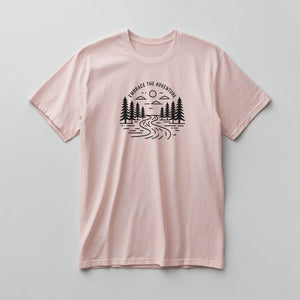
It also helps to remember that stretch is not only about technical trousers and gymwear. A simple cotton jersey can have enough natural give to stay comfortable while still feeling stable, especially when the cut is right. That’s why a basic layer matters: a well-made tee sets the baseline for how everything else feels on top of it, and you can see that clearly when you rotate through different weights in the t-shirts category. The goal is not maximum stretch, it’s the kind of stretch that disappears once you stop thinking about it.
Recovery and shape memory: why some garments “bag out”
Stretch is only half the story. The part that annoys people is what happens after the stretch, when elbows start to dome, knees look like they’ve been sat in all week, or a waistband stops sitting where it used to. That’s recovery: how well a fabric returns to its original dimensions after being extended. In the real world it’s not a single moment, it’s a repeated cycle, loaded and unloaded, damp and dry, warm and cold, day after day. Fabrics don’t fail all at once, they quietly drift.
Some “bagging out” is simply fit meeting physics. If a garment is cut close and you load the same point repeatedly, that area is going to take the hit. Pack straps, cuffs, seat panels, knee bends, and the points where you grab fabric to adjust layers all get worked harder than the rest. Recovery becomes the difference between a garment that looks like it still belongs to you after a season and one that looks borrowed, even if the fibres haven’t technically broken down yet.
A useful way to think about it is to separate comfort from shape-holding. A fabric can be pleasant to wear and still have mediocre shape memory. Outdoors, mediocre shape memory tends to show up as looseness where you least want it, especially around knees, cuffs, and hems that start to twist. If you want the practical mechanics without getting lost in lab talk, the deeper explainer on recovery in fabrics clarifies what you’re actually feeling when something “snaps back” versus when it just stops trying.
Recovery is also where laundering and drying habits matter, not as rules, but as context. Heat, agitation, and repeated stretching while damp can all nudge a fabric toward that slightly tired shape. Some blends bounce back surprisingly well even when they’ve been treated roughly. Others start to drift even if you’re careful. Outdoors you notice it faster because movement is not occasional, it’s constant. The garment isn’t just being worn, it’s being used, and the difference between “worn” and “used” is where recovery gets tested.
There’s also a psychological piece to it. When a garment loses shape, people often describe it as feeling “cheap” even if it was not. That’s because shape is part of trust. A sleeve that stays where it’s meant to stay makes you stop adjusting it. A waistband that behaves lets you focus on what you’re doing. Good recovery is quiet. It doesn’t demand attention, and that’s the whole point.
Where the trail exposes the difference: packs, weather, repetition
Outdoor wear is a stress test because it concentrates strain in predictable places. Pack straps load the shoulders and upper back, then shift slightly with every step. Knees and hips flex through the same arcs for hours. Cuffs get pushed up, pulled down, and rubbed against skin, gloves, and jacket linings. Even the way you sit on a cold rock or lean on a gate puts short, sharp tension into the fabric. Over time, these are the moments that separate “stretchy” from “stays right.”
Weather does its own quiet meddling. Damp fabric behaves differently under tension than dry fabric, and cold can make some materials feel firmer or less forgiving. Wind and drizzle also change how you move, because you hunch, brace, and tighten layers. That movement pattern matters because the fabric isn’t being stretched in a neat, even way. It’s being tugged in small, awkward pulses. A garment that feels fine on a calm day can feel suddenly fussy when the conditions push you into constant micro-adjustments.
It’s also worth noticing that people use “recovery” loosely, sometimes meaning comfort and sometimes meaning shape memory. The plain-language way it’s explained in sewing circles is often clearer than outdoor marketing, and the section on what recovery means is a good example of that everyday definition. Once you’ve got that definition in your head, you start spotting it everywhere, from cuffs that stay crisp to knees that slowly lose the plot.
Repetition is the final piece, because a single stretch event doesn’t tell you much. The trail is repetitive by design: step, step, step, reach, bend, lift, pull. The fabric is asked the same question over and over, and the answer changes as the day goes on. You notice it when you stop for lunch and your sleeves sit differently, or when you get back to the car and the seat looks slightly polished where it’s been rubbed for miles. Those small signals are the real feedback loop.
So the useful mindset here is not chasing the stretchiest fabric, it’s choosing the kind of movement you want to feel and the kind of shape you want to keep. Some people prefer a soft, forgiving feel that prioritises comfort even if the garment relaxes a bit. Others want a firmer fabric that holds its lines, even if it feels less cosy at rest. Outdoors, both can work, but the wrong match will show up quickly, and it will show up in the same places every time.
Elastane, spandex, and blended fabrics: the useful bits
When people talk about “stretch fabric” they usually mean one of two things. Either the fabric is a knit that naturally gives because of its loop structure, or it is a fabric that has a stretch fibre blended in. Elastane and spandex are the same thing in everyday use, just different names, and their job is simple: they let the fabric extend and then help it pull back. The important detail is that you do not need much of it for the feel to change, and too much can make a garment feel like it’s always slightly pulling.
The useful part, outdoors, is not that elastane makes things stretchy. It’s that it can make movement feel more even. Knees bend without the fabric fighting, shoulders roll under pack straps without the seam feeling like a hinge, and cuffs don’t need constant tugging back into place. The best blends feel ordinary until you notice you’ve stopped adjusting your clothing. The worst blends feel impressive in a quick tug test and then feel clammy, clingy, or oddly loose once the fabric has warmed up and been worked for a few hours.
Where blends get interesting is that stretch and recovery are not guaranteed just because elastane is present. Fibre content is only one part of the story, and construction does a lot of heavy lifting. A well-built knit can hold its shape better than a poorly built blend, and a cheap blend can stretch generously while still staying slightly deformed after use. If you want the practical, non-mystical view of what elastane actually contributes, the guide on elastane and spandex in apparel is a solid reference point for the real-world pros and annoyances.
Another quiet factor is direction. Some fabrics stretch mostly across the width, which can feel great through the chest and shoulders but do very little for stride or high steps. Others have a more balanced stretch, which can feel less dramatic but more dependable. Outdoors, dependable usually wins. You are not trying to impress anyone with how far a sleeve can be pulled, you are trying to move through a day without noticing the garment at all, and that often means the stretch is moderate and well controlled rather than dramatic.
There is also a “feel” issue that matters more than people admit. Elastane can change drape, and it can change how fabric sits when damp. A stretch blend can cling when you sweat, or it can feel slightly springy against the skin, especially in lighter weights. That is not automatically bad, it just means the fabric is making a choice. If you like a softer, more relaxed feel, a garment with less stretch fibre can be more pleasant. If you want something that keeps its shape through constant movement, a small amount of elastane can be the difference between steady and sloppy.
Trade-offs: comfort, durability, and pilling over time
Stretch always comes with trade-offs, even when it’s done well. The first is abrasion. Fabrics that move easily can also be more prone to surface change in high-rub zones, because the yarns are constantly shifting and being worked. Pack straps, hip belts, and even repeated sleeve scrubbing against a jacket lining can turn a smooth surface into a slightly fuzzy one. It’s not dramatic damage, it’s just the slow polishing and lifting that makes a garment look older than you expected, especially if the fabric is soft and the knit is open.
The second trade-off is shape versus comfort. A fabric that feels very soft and very stretchy often does so because it is happy to deform. That can feel brilliant on a short walk and a bit sloppy on a long one. A firmer fabric, with less obvious give, can feel less cosy when you first put it on but stay more composed as the day goes on. Outdoors, that composure is what keeps cuffs, hems, and shoulders from feeling like they are slowly drifting. Comfort is not only softness, it is predictability.
The third trade-off is moisture and heat. Stretch blends can be excellent at moving with you, but some of them feel damp for longer once wet, especially if the yarn mix or finish holds onto moisture. That can make a fabric feel heavier than it should, or colder when you stop. It also changes how the fabric behaves under load, because damp fibres slide and compress differently. This is where “technical” can become counterproductive if the fabric is solving the wrong problem for the way you actually walk and layer.
Then there’s longevity in the boring sense: how a garment feels after repeated washes, not just how it performs on day one. Stretch fibres can slowly lose their spring, especially if they are repeatedly overheated or stretched while damp, and when that happens the fabric can feel tired even if nothing is visibly broken. The most frustrating version is when a garment still looks fine on the hanger but feels less stable on the body. Outdoors, you notice it because you start adjusting it more often, and you can feel the difference in the same handful of stress points every time.
Finally, there’s the trade-off you only notice when you’re carrying on with your day: some stretch fabrics encourage a tighter fit, and tighter fits can be less forgiving when conditions change. If the temperature drops or the wind picks up, a close, elastic fabric can feel colder and less comfortable than a slightly looser, more stable layer. On the other hand, a close fit can be brilliant under a shell because it doesn’t bunch and it moves cleanly. None of these are universal wins. The useful move is picking the compromise that matches your actual habits, not the one that looks most “technical” on a label.
Choosing your baseline: how much stretch is enough
The mistake people make is treating stretch like a single upgrade. In reality, you are choosing a baseline feel and a baseline level of shape-holding. If you mostly walk, travel, and layer casually, you can often live happily with modest stretch and good construction, because the loads are gentle and the movement is steady. If you scramble, climb styles, step high, or carry a heavier pack, you tend to notice the limits faster, and a controlled stretch can make everything feel calmer, especially through knees and shoulders.
A simple way to judge it is by asking where you hate fuss. Some people can’t stand a hem riding up or a sleeve that needs pulling down every ten minutes. Others can’t stand cling, especially when damp, and would rather accept a bit of looseness than feel wrapped. Outdoors, both preferences are reasonable, and neither one is solved by “more stretch.” Often the answer is less stretch in the wrong places, and better recovery in the places that get loaded repeatedly.
It can help to notice the time scale you care about. A fabric that feels brilliant for the first hour can still be the wrong choice if it slowly relaxes by mid-afternoon and never quite comes back until it’s washed. Likewise, a fabric that feels slightly firm at the start can end up being the more comfortable option because it holds steady as your body heats up and your movement becomes less tidy. Outdoors, “comfortable” often means “consistent,” not “soft.”
It also helps to think in layers rather than single garments. Your base layer can be comfortable and stable, and your outer layer can handle the movement, or the other way around, depending on how you dress. A stretchy outer layer can protect a more stable base from abrasion and tugging. A stable outer layer can stop a stretchy base from feeling too clingy. Once you start thinking like that, you stop chasing the one perfect fabric and start building a combination that behaves well across different days.
If you want the wider frame, it’s worth reading beyond just stretch and recovery because these traits never exist alone. Fibre choices, yarn structure, knit density, and finishing all nudge how a garment feels on the body and how it ages over time, and the overview on materials and fabric performance puts those moving parts in the same room without turning it into a lab report. It makes it easier to spot when “stretch” is being used as a vague promise instead of a real, wearable behaviour.